
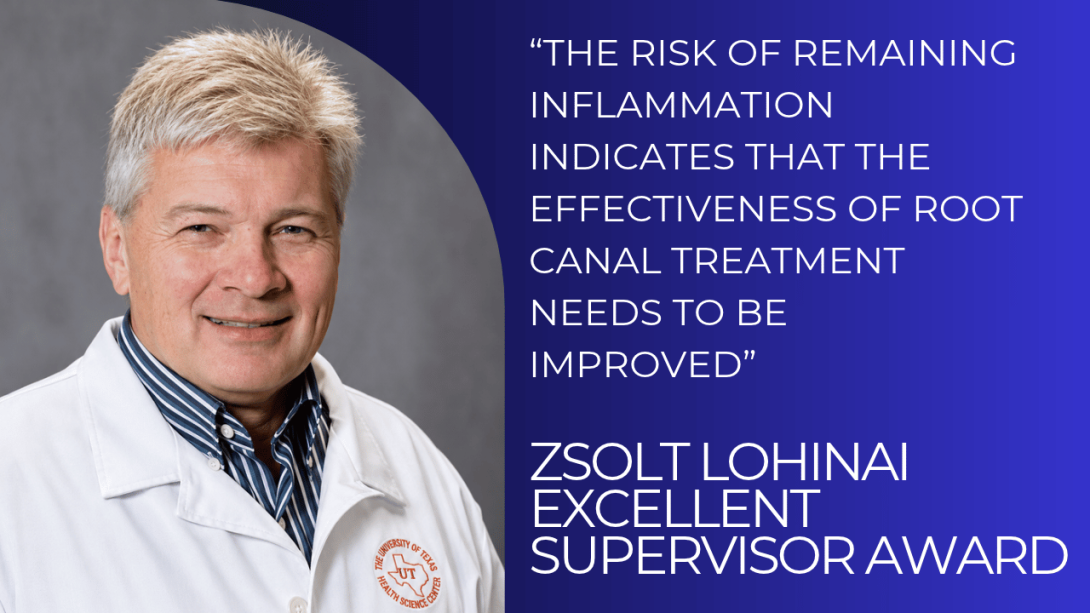
His students, whose research addresses highly relevant and clinically significant topics, are making excellent progress with their research. During group meetings, he not only helps them, but also assists others with his insightful questions and observations. Prof. Zsolt Lohinai was honored with the Excellent Supervisor Award by the Centre for Translational Medicine.
Prof. Lohinai joined CTM soon after it was established at Semmelweis University, and almost immediately began supervising Ph.D. students. He is a very active instructor in the Dentistry Group, offering advice to many students and helping them navigate challenging scientific issues. Currently, he has two students: Anna Zurányi, a first-year student, and Caroline Kelly, a fourth-year student. Both of them are making excellent progress with their work.
“I am their co-supervisor with Dr. Enikő Vasziné Szabó, who is exceptionally thorough and helpful. In Dr. Kelly’s research, we are investigating the prevalence and odds of the keystone periopathogen, Porphyromonas gingivalis, in cardiovascular diseases. Studies have shown that patients with atherosclerosis who harbor this pathogen in their mouths are five times more likely to have it in their surgically excised blood vessels as well – which, in my view, represents a high odds ratio. This has led to the suspicion that this bacterium may play at least a contributing role in the development of atherosclerosis. We have already launched a clinical trial based on this suspicion. In this study, we are examining blood vessels removed from patients at the Department of Vascular and Endovascular Surgery at Városmajor Heart and Vascular Centre, Semmelweis University, due to stenosis, or aneurysms. At the same time, with the assistance of the Institute of Medical Microbiology, Semmelweis University, we are investigating which bacteria are present in the mouth of the affected patients. This is an excellent example of how targeted research can be initiated on the results of a meta-analysis, considering the shortcomings of previous RCTs conducted in this field.”
Anna Zurányi's research focuses on root canal treatments. “This topic is important because roughly 60% of adults in the European Union have teeth that have received root canal treatment, and 40% of those have inflammation around the root tip. It is difficult to determine whether this inflammation is active or passive, but the fact is that some level of inflammation is present in these patients. This shows that while medicine can prevent the loss of dead teeth, it cannot always completely stop infections affecting the root tips. This poses a problem because it can lead to further local and/or secondary focal infections – such as dermatological diseases, arthritis, or CVDs. This can be a concern, particularly in older people, whose immune systems are less effective. For this reason, it is important for dentists to monitor the condition of the affected teeth for four years following root canal treatment. Only after this period can the patient be declared cured. The high risk of residual inflammation also indicates that the effectiveness of root canal treatment needs to be improved. This can be achieved, for example, by using adjunctive laser and ultrasound techniques that enhance the effectiveness of disinfection. It would also be important to conduct a meta-analysis to determine which available disinfection methods are most advantageous and effective. We are currently working on this significant clinical question.”
(Emese Szabó)